Galicia · north-west Spain
Galicia, plainly: its manor houses, its coast and its wine
The corner of Spain that rains, speaks its own language and keeps around 170 granite manor houses scattered across four provinces.
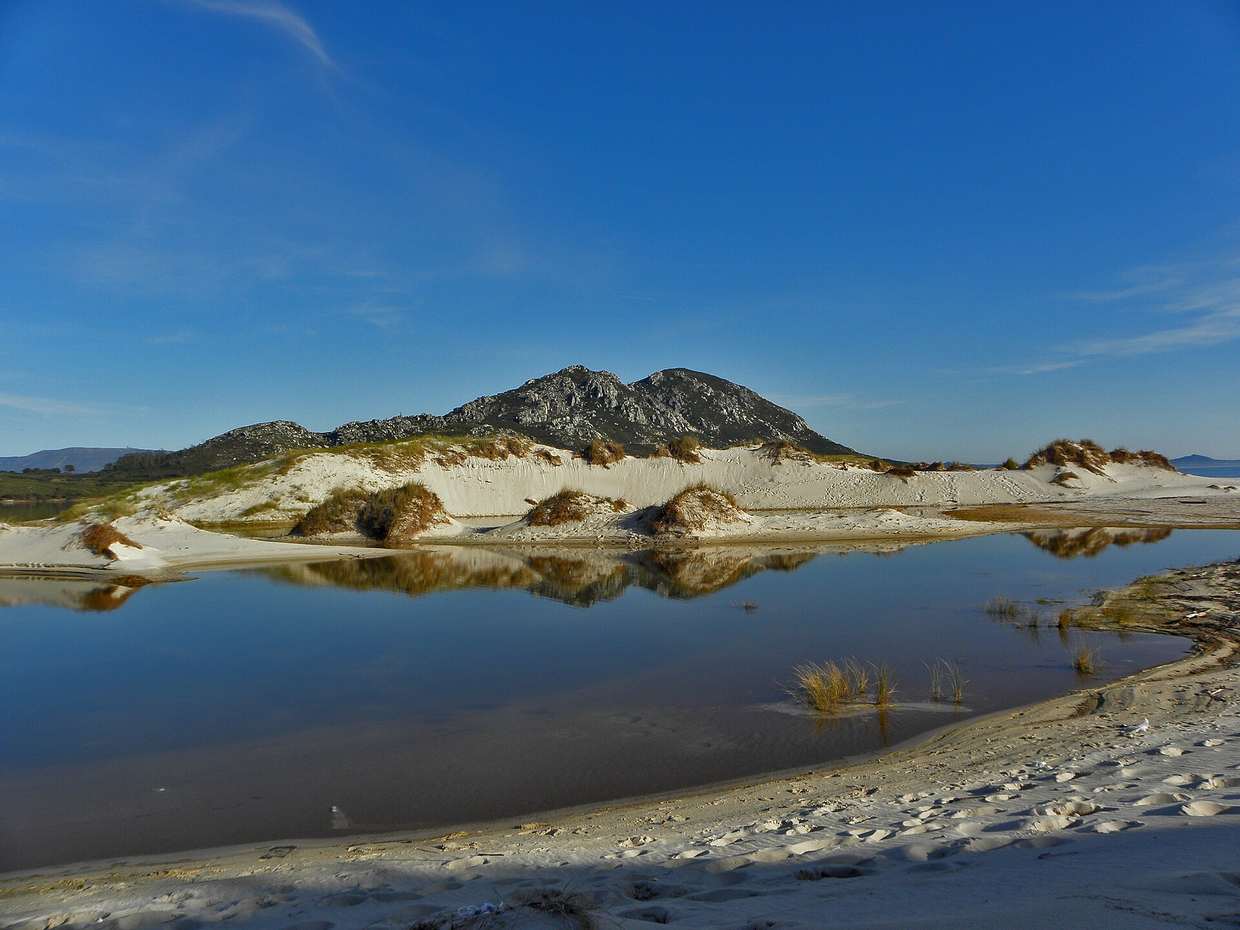
Fotografía: amaianos from Galicia, CC BY 2.0, vía Wikimedia Commons.

What a pazo is
A pazo is the country seat of the Galician rural gentry — granite ashlar, an L or U plan around a courtyard, and a set of outbuildings that repeat almost everywhere: a chapel, an hórreo, a dovecote, a gateway carrying a coat of arms and a walled kitchen garden. They appear between the sixteenth and eighteenth centuries, when the nobility came down from their defensive towers into the valleys, which is why so many have an older tower embedded in a much more domestic later building.
Most are still private and cannot be visited. The ones that can usually opened a commercial door at some point — a small hotel, a winery, a venue. The full catalogue, by province and municipality, is on the Spanish side of this guide, and the four provincial lists are at A Coruña, Pontevedra, Lugo and Ourense.
Houses with an entry of their own
29 of the 170 catalogued houses have a page here, because those are the ones with enough documented history to write from. Each carries what is known about the building, where it sits, which houses are nearest and how far. The entries themselves are in Spanish — the names, places and distances read the same either way.
-

- Pazo de Figueiras
-

-

-

-

-

- Casa Grande de Lamela
-

-

-

- Pazo de Parada
-

-

-

-

-

-

-

-

-

- Pazo de García Flórez
-

- Pazo de Moldes
-

-

-

-

- Pazo de Galegos
Photographs: Wikimedia Commons; author and licence on each entry.
How the coast divides up
Four stretches, and they are not interchangeable. The Rías Baixas in the south-west have wide drowned valleys, the warmest water and the most building. The Costa da Morte is cliff and open Atlantic, beautiful and cold. The Rías Altas in the north keep medieval towns at the head of deep inlets. And A Mariña, along the north coast towards Asturias, has the long straight beaches and a narrow-gauge railway that actually links the villages up.
The wine
Five denominations, none of them alike: Rías Baixas on the coast, Ribeiro and Ribeira Sacra in the river valleys, Valdeorras to the east and Monterrei on the Portuguese border. Albariño is the grape most people have heard of; mencía and godello are the ones worth looking for. More on this under wine.
The two strands meet in the Ulla valley, fifteen kilometres south of Santiago. The Pazo de Galegos in Vedra, once the home of the historian Antonio López Ferreiro, became one of the first wineries of the Ribeiras do Ulla subzone in 1990 and still makes albariño on its own vineyard.
Getting around
Santiago de Compostela has the main airport and sits within two hours of almost everything described here. Public transport connects the larger towns and misses most of the coast, so the practical answer for a first visit is a car. See around Santiago for what is reachable without one.
The language
Galician and Spanish are both official, and both are widely spoken. Galician is closer to Portuguese than to Spanish, which is why place names on signs often differ from the Spanish forms in older guidebooks — A Coruña rather than La Coruña, Ourense rather than Orense. Menus and museum labels are usually in both.
Weather, honestly
It rains, and mostly between October and March. July and August are the driest months and the only ones where swimming is comfortable. Spring and autumn are green and changeable, and the interior is colder than the coast in winter by a wide margin.
When to come
June and September are the best compromise: the sea is warm enough, the towns are open, and the roads are not full. August is the busiest month by a long way. Outside the cities, a good deal of rural accommodation closes between November and March.
Common questions
Where is Galicia?
The north-west corner of Spain, above Portugal and west of Asturias. Santiago de Compostela is its capital and has the main airport.
How many days do you need?
Five to seven for a first visit. That covers Santiago, one stretch of coast and one river valley without spending the trip driving.
Is English widely spoken?
In the cities and in tourist accommodation, reasonably. In rural bars and small villages, much less so — some Spanish helps.
What is Galicia best known for?
The pilgrimage to Santiago, seafood, albariño wine, and a coastline of drowned river valleys called rías.