Practical
Where to stay in Galicia: pazo hotels and rural houses
The short version: the interesting places to sleep in Galicia are old buildings that needed a reason to keep standing.
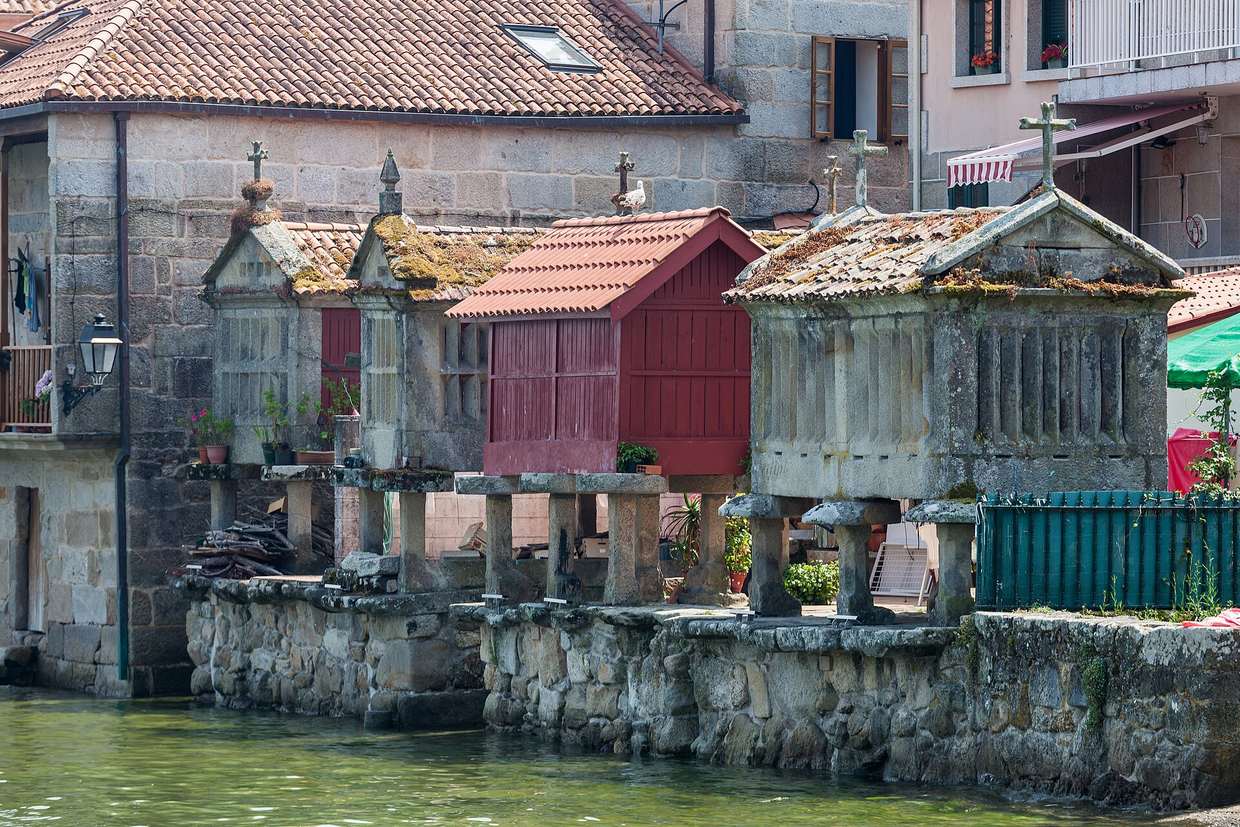
Fotografía: Luis Miguel Bugallo Sánchez (Lmbuga), CC BY-SA 4.0, vía Wikimedia Commons.

Staying in a manor house
A roof of that size costs money every year, and from the 1980s a good number of Galician families solved the problem by opening the house — as a small hotel, as a rural guest house or as a venue for weddings. That commercial door is the single best predictor of whether a pazo can be seen from the inside at all.
These are not large hotels. A converted manor house typically has somewhere between six and twenty rooms, no lift, and a restaurant that may only serve residents. What it does have is the courtyard, the chapel and the garden, which is the reason to go.
This guide does not book rooms and does not rank them. What it can tell you is which houses exist, where they are and what is documented about them: the catalogue runs to 170 entries across A Coruña, Pontevedra, Lugo and Ourense. Where a house is known to take guests, its entry says so and names the source; where the entry is silent, the fact simply is not on public record, and the municipality is the shortest way to find out.
How rural accommodation is graded
Galicia regulates rural lodging under the turismo rural categories, which run from a working farm letting a couple of rooms up to a fully staffed country hotel in a historic building. The grade tells you about services and not about charm, so it is worth reading past it.
Bases that make sense
| If the trip is about | Base | Why |
|---|---|---|
| The city and day trips | Santiago de Compostela | Airport, trains, and two hours from most of the region |
| Coast and seafood | The Arousa estuary | Sheltered beaches, working ports, wine on the doorstep |
| Wine and river | The Ulla valley or Ribeira Sacra | Vineyards, manor houses, canyon roads |
| Cliffs and quiet | Costa da Morte | Empty beaches, few services out of season |
What a converted house actually looks like
Two make the point. The Pazo de Oca, in A Estrada, keeps eight hectares of garden with a stone barge moored in its pond and opens to visitors all year without letting rooms at all. The Pazo de Mugartegui, by contrast, sits in the middle of Pontevedra and now houses the Rías Baixas wine council — the same building type put to a use that has nothing to do with tourism. Between those two extremes sits most of what is bookable.
The Ulla valley
Fifteen kilometres south of Santiago, the Ulla marks the old boundary between two provinces and, for centuries, between two seigneurial jurisdictions. That is why the manor houses cluster along both banks. It is also the Ribeiras do Ulla wine subzone and the route the southern pilgrim roads take into the city, so a base here covers three things at once.
The Pazo de Galegos, in the parish of San Pedro de Vilanova in Vedra, is one of the valley's converted houses. It was the home of the historian Antonio López Ferreiro, and since 1990 the family that owns it has run a winery there and opened the house as rural accommodation. Its catalogue entry sets out what is documented about the building and the estate; bookings are a matter for the house itself.
Individual houses in the valley, with their municipality and location, are listed under A Coruña in the catalogue.
The oldest surviving guest registers in the valley are kept by the pilgrim hostels, not the manor houses — the gentry recorded their visitors in private correspondence instead.
Booking rhythms
Rural properties in Galicia fill from the outside in: August and the days either side of a public holiday go first, then weekends, and midweek stays outside July and August are usually available at short notice. Prices track the same pattern, and the gap between August and September is often substantial.
Frequently asked questions
Can you stay in a pazo?
In some of them. A number of Galician manor houses were converted into small hotels or rural guest houses from the 1980s onwards, which is what saved many of them. Most, however, remain private homes.
What is a casa rural in Spain?
A regulated category of rural accommodation, graded by the regional government. In Galicia the grades run from a simple farmhouse letting rooms to a fully staffed country hotel.
Where is a good base for a first visit?
Santiago de Compostela for a city base with everything within two hours, or the Arousa estuary if the trip is mainly about the coast and the wine.
Do these places open all year?
Many rural properties close or reduce opening between November and March. Along the coast outside the larger towns, winter opening is the exception rather than the rule.