Wine
Galician wine: Rías Baixas, Ribeira Sacra and the other three
Five denominations that share a region and almost nothing else — one maritime, two carved into river gorges, two continental.
Fotografía: Tanja Freibott, CC BY-SA 4.0, vía Wikimedia Commons.

The Spanish side of this guide goes further on both counts: an overview of wine tourism denomination by denomination, and a page on Ribeiras do Ulla, the smallest and least known of the five Rías Baixas subzones, which is the one that runs past Santiago.
Rías Baixas
The coastal denomination, and the one that exports. Albariño is planted almost everywhere, and the traditional training system is a pergola on granite posts — a practical answer to ground that is rarely dry. Five subzones: Val do Salnés, O Rosal, Condado do Tea, Soutomaior and Ribeiras do Ulla, the last and youngest of them, in the valley south of Santiago.
Ribeira Sacra
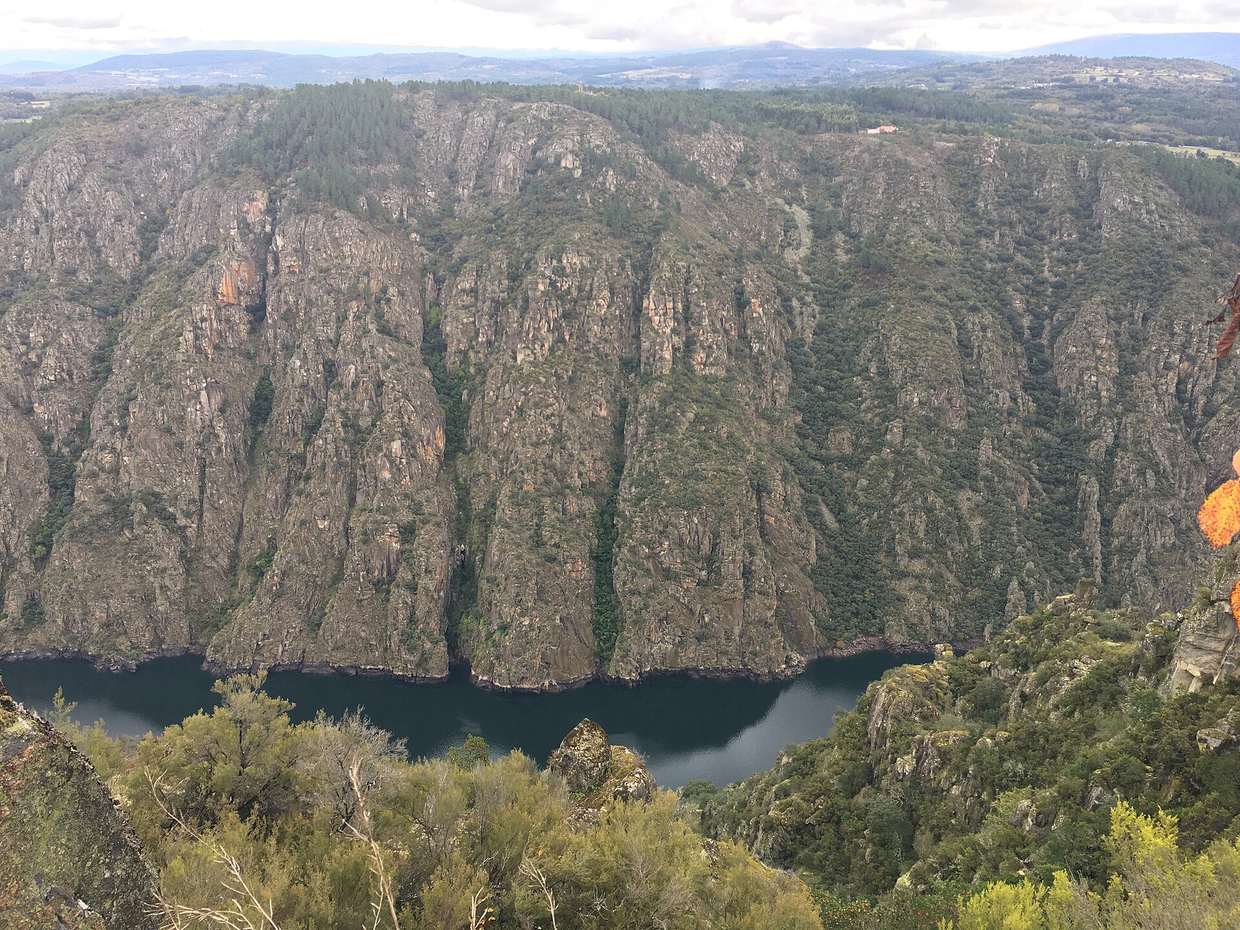
Terraces cut into the walls of the Sil and Miño canyons, on gradients that rule out machinery altogether. Mencía is the main grape. The vineyards were first worked by monastic communities, which is where the name comes from, and the scenery does most of the selling.
Ribeiro, Valdeorras and Monterrei
Ribeiro is the oldest of the five and once shipped to England and Flanders; treixadura leads the blends. Valdeorras, to the east, is godello country and makes the most age-worthy whites in Galicia. Monterrei sits on the Portuguese border with a drier, more continental climate than anywhere else in the region.
Galician vineyards were nearly wiped out twice in the nineteenth century, first by powdery mildew and then by phylloxera. Most of the native varieties bottled today were brought back from very small plantings in the 1980s.
Wine and the manor houses
The link is not decorative. The rural gentry built their houses on agricultural rent, and in the valleys that rent was largely wine — so vineyard and manor house tend to appear in the same places. A number of pazos still have working cellars. They are listed by province in the catalogue.
What to bring home
Albariño travels well and is easy to find outside Spain, which makes it the least interesting thing to carry back. The bottles worth the luggage are the ones with small production and little export: a godello from Valdeorras, a mencía from a single Ribeira Sacra terrace, or a treixadura blend from Ribeiro. Most wineries sell at the door, and several will ship.
Reading a Galician label
The denomination appears on the back seal rather than the front, and in Rías Baixas the subzone is often printed underneath it — which is the quickest way to tell a Salnés wine from one grown inland. A bottle without a subzone is usually a blend across several of them.
Visiting a winery
Book ahead, and expect the person showing you round to be the person who made the wine. These are small operations — a few hectares, a family name, sometimes no tasting room at all, just a table among the tanks. That informality is the appeal, and it is also why turning up unannounced rarely works.
Harvest runs from early September to mid-October depending on the denomination and the year, and during it most producers stop taking visitors altogether. The weeks either side are the best time to come: the vineyard is at its most photogenic and nobody is too busy to talk.
Frequently asked questions
Is all Galician white wine albariño?
No. Albariño dominates Rías Baixas, but Ribeiro works with treixadura and Valdeorras with godello, which many growers consider the more serious grape of the two.
Can you visit wineries in Galicia?
Many take visitors by appointment. Most are small family operations without fixed opening hours, and a large share close to the public during the September and October harvest.
What is viticultura heroica?
Vineyard work on terraces too steep for machinery — in Ribeira Sacra, slopes above sixty per cent over the Sil canyon, picked by hand and sometimes moved by boat.